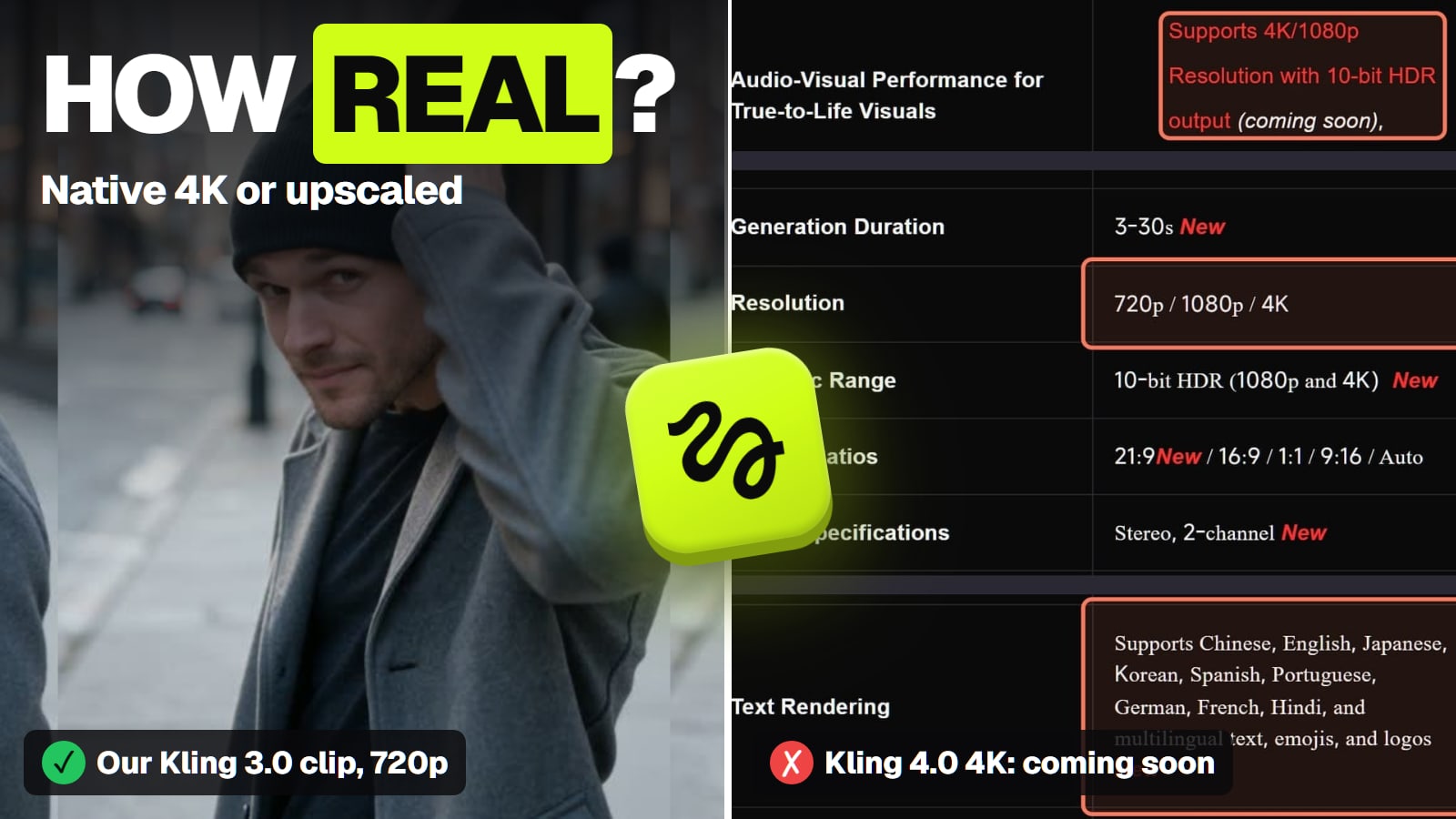
Seedance 2.5 for realistic people, Kling 3.0 for detail (the only maker here that calls its 4K native, 30 Higgsfield credits for 5 seconds with sound), Veo 3.1 for realistic sound. Native vs upscaled resolution for 13 models, frame rates where documented, and what our own clips showed.
Some links on this page are referral links: we may earn a commission, at no cost to you.
Share
The best realistic AI video generator is Seedance 2.5 for realistic people, Kling 3.0 for the most real detail, and Veo 3.1 when realistic sound has to come with the picture. Higgsfield's own model guide sends "realistic human motion" to Seedance; Kling 3.0 is the only model here whose maker calls its 4K native, and it cost 30 Higgsfield credits for 5 seconds with sound; Google says Veo 3.1 generates sound effects, ambient noise and dialogue natively. Resolutions, audio and prices were read on the makers' pages and Higgsfield on November 3 to 8, 2026; realism judgments come only from our own clips or the makers' words.
Realistic AI video, resolution by resolution: native or upscaled (makers' pages and Higgsfield, Nov 3 to 8, 2026)
Kling 3.0 (Kuaishou)
Top resolution
4K
Native or upscaled
Native, per Kling
Sound
Yes, with an on/off switch on Higgsfield
Frame rate
Not published
Veo 3.1 (Google)
Top resolution
4K on Vertex (Veo 3.1 Generate); Fast and Lite 1080p
Native or upscaled
Vertex doesn't say; Flow's 1080p and 4K are upscaling
Sound
Sound effects, ambient noise, dialogue
Frame rate
Not published
Seedance 2.0 (ByteDance)
Top resolution
4K on Higgsfield
Native or upscaled
Not stated
Sound
Yes
Frame rate
Not published
Seedance 2.5 (ByteDance)
Top resolution
1080p on Higgsfield; 4K for enterprise on BytePlus, not in the US
Native or upscaled
Not stated
Sound
Yes
Frame rate
24 fps in our clip
Kling 4.0 (Kuaishou)
Top resolution
1080p; 4K and 10-bit HDR marked coming soon
Native or upscaled
Not stated
Sound
Stereo, speech in 9 languages
Frame rate
24 fps in our clip
MiniMax H3
Top resolution
2K
Native or upscaled
Not stated
Sound
Native stereo
Frame rate
Not published
Grok Imagine 1.5 (xAI)
Top resolution
1080p
Native or upscaled
Native
Sound
Native audio, lip-synced speech
Frame rate
Not published
Grok Imagine 1.5 Lite (xAI)
Top resolution
1080p
Native or upscaled
Upscaled from 720p
Sound
Native audio, lip-synced speech
Frame rate
Not published
Gemini Omni 1.2 Flash (Google)
Top resolution
4K
Native or upscaled
1080p and 4K upsampled
Sound
Native audio
Frame rate
Not published
Wan 3.0 (Alibaba)
Top resolution
1080p
Native or upscaled
Not stated
Sound
Yes, with a switch
Frame rate
Not published
Wan 2.2, open weights (Alibaba)
Top resolution
720p
Native or upscaled
Native
Sound
Not in text or image to video
Frame rate
24 fps (TI2V-5B)
Luma Ray3.2 (not on Higgsfield)
Top resolution
1080p
Native or upscaled
Not stated
Sound
None
Frame rate
Not published
Pika 2.5 (not on Higgsfield)
Top resolution
1080p
Native or upscaled
Not stated
Sound
None, silent
Frame rate
Not published
Top resolution
Native or upscaled
Sound
Frame rate
Kling 3.0 (Kuaishou)
4K
Native, per Kling
Yes, with an on/off switch on Higgsfield
Not published
Veo 3.1 (Google)
4K on Vertex (Veo 3.1 Generate); Fast and Lite 1080p
Vertex doesn't say; Flow's 1080p and 4K are upscaling
Sound effects, ambient noise, dialogue
Not published
Seedance 2.0 (ByteDance)
4K on Higgsfield
Not stated
Yes
Not published
Seedance 2.5 (ByteDance)
1080p on Higgsfield; 4K for enterprise on BytePlus, not in the US
Not stated
Yes
24 fps in our clip
Kling 4.0 (Kuaishou)
1080p; 4K and 10-bit HDR marked coming soon
Not stated
Stereo, speech in 9 languages
24 fps in our clip
MiniMax H3
2K
Not stated
Native stereo
Not published
Grok Imagine 1.5 (xAI)
1080p
Native
Native audio, lip-synced speech
Not published
Grok Imagine 1.5 Lite (xAI)
1080p
Upscaled from 720p
Native audio, lip-synced speech
Not published
Gemini Omni 1.2 Flash (Google)
4K
1080p and 4K upsampled
Native audio
Not published
Wan 3.0 (Alibaba)
1080p
Not stated
Yes, with a switch
Not published
Wan 2.2, open weights (Alibaba)
720p
Native
Not in text or image to video
24 fps (TI2V-5B)
Luma Ray3.2 (not on Higgsfield)
1080p
Not stated
None
Not published
Pika 2.5 (not on Higgsfield)
1080p
Not stated
None, silent
Not published
"Not stated" means the maker's page we read gives the resolution without saying whether it is rendered or upscaled. Runway's Gen-4.5 is missing because its help center wouldn't load for us; Runway says Gen-4.5 has native audio. For the same models judged on other jobs, see the best AI video generator guide.
Why "native" matters more than the number
A 1080p file can hold 1080p of real detail, or 720p of detail stretched to fit. Upscaling makes the file bigger and smoother; it doesn't invent the fine texture (skin, fabric, small text) that makes footage read as real. So the resolution in a model's menu is only half the answer, and a few makers are refreshingly clear about which half you get:
xAI says Grok Imagine 1.5 renders up to 1080p natively, while 1.5 Lite reaches 1080p by upscaling from 720p.
Google's Gemini API prices Gemini Omni 1.2 Flash at 360p and 720p, and lists 1080p and 4K as upsampled.
Google Flow offers 1080p upscaling free on Google AI Plus, Pro and Ultra (not to non-subscribers) and 4K upscaling only on Ultra, at 50 credits.
Kling says Kling 3.0 outputs native 4K, at 30 Kling credits a second on kling.ai, where even 1080p is a paid feature.
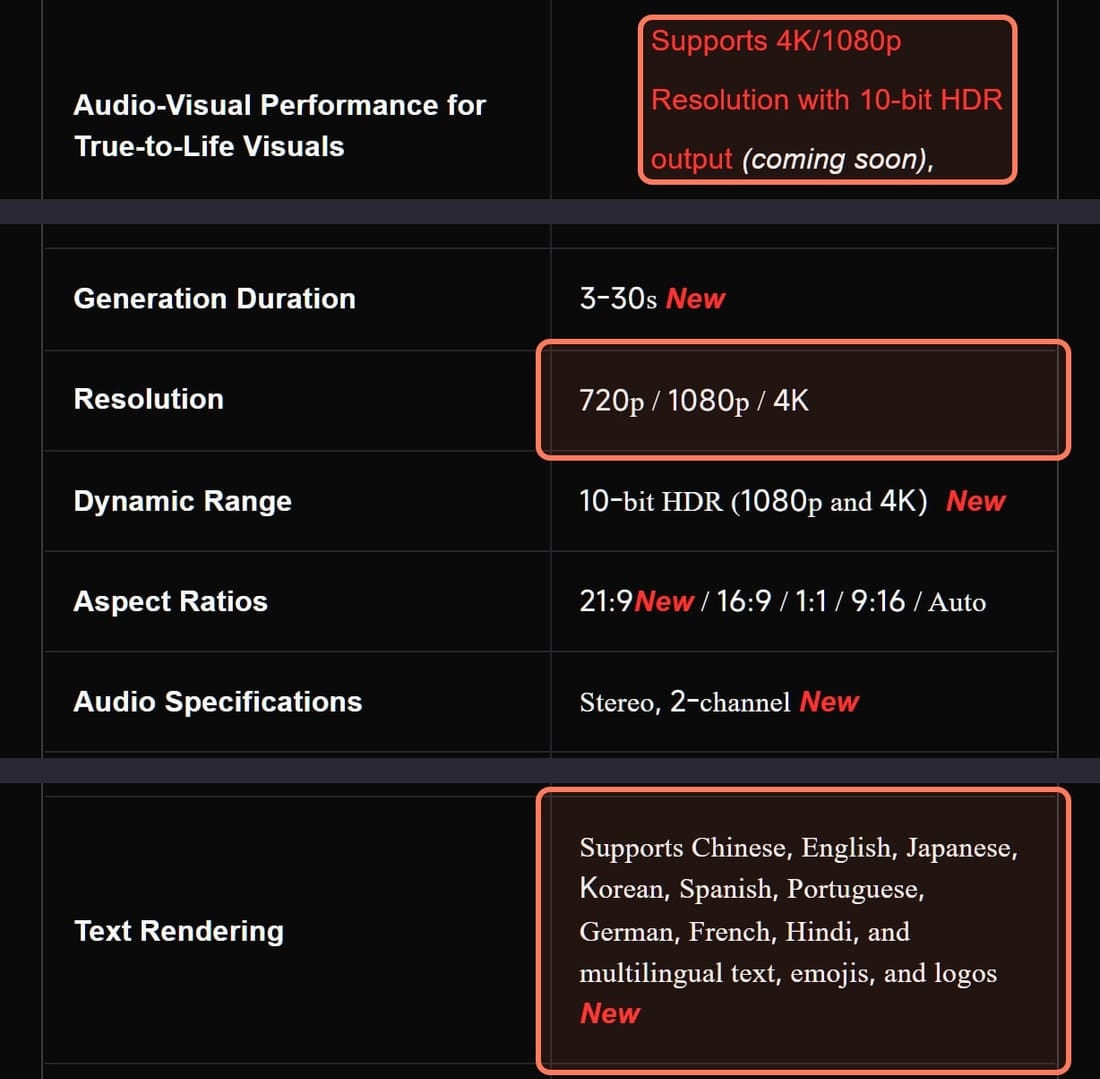
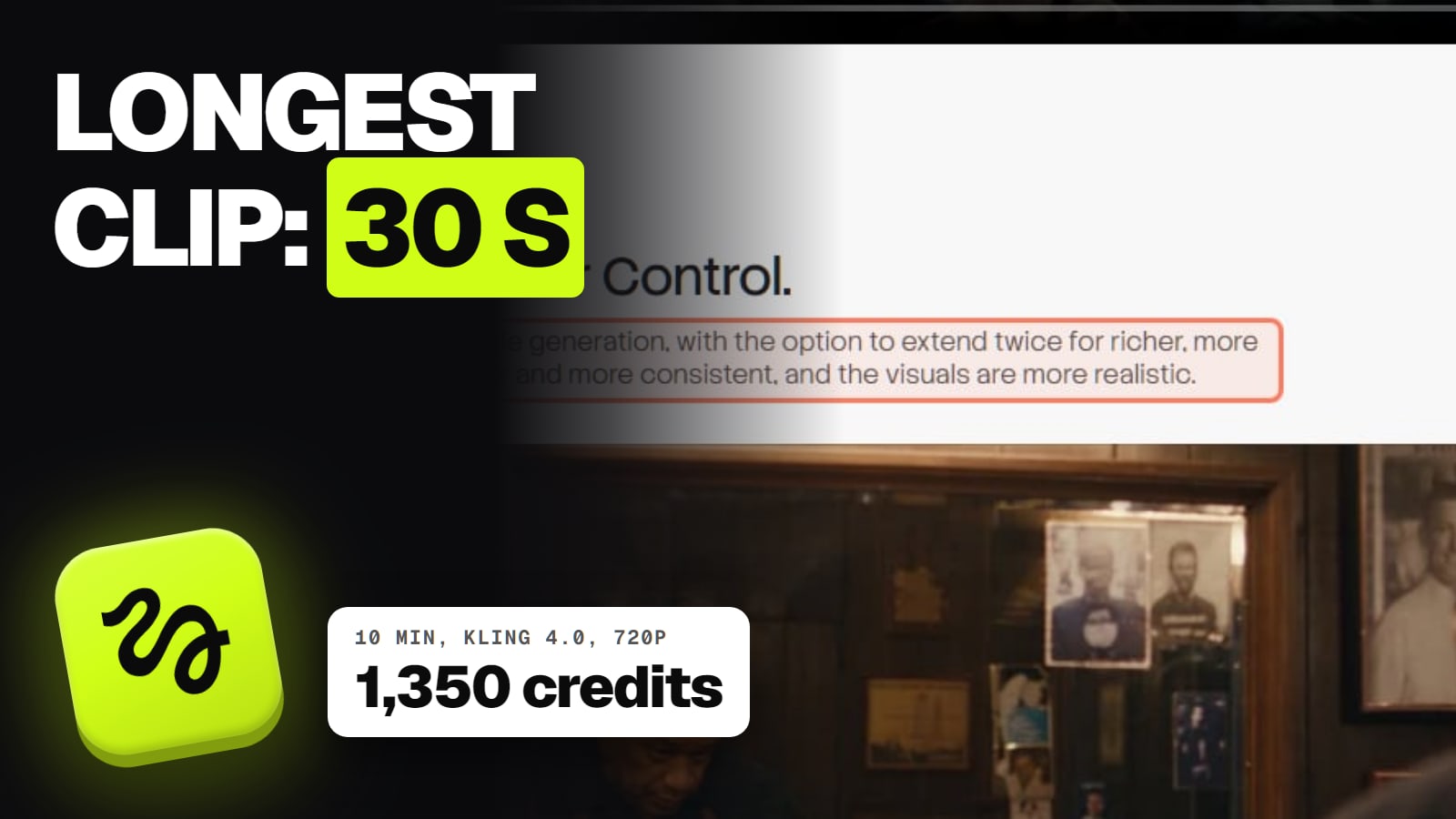
Kling's Kling 4.0 user guide (kling.ai, dated Nov 4, read Nov 7, 2026): the spec table lists 4K, while the overview marks 4K/1080p 10-bit HDR output as coming soon. Three crops from one page; outlines ours. · Screenshot of kling.ai by aliteq
Read the fine print the same way when a spec table looks generous. Kling's own Kling 4.0 guide lists 720p, 1080p and 4K in its spec table, but its overview marks 4K and 10-bit HDR output as "coming soon", and Higgsfield offers Kling 4.0 at 720p or 1080p only. Until Kling ships it, the 4K Kling is 3.0, not 4.0.
What our own clips showed about realism
We've generated video on two models ourselves; nothing below is a claim about the models we haven't run.
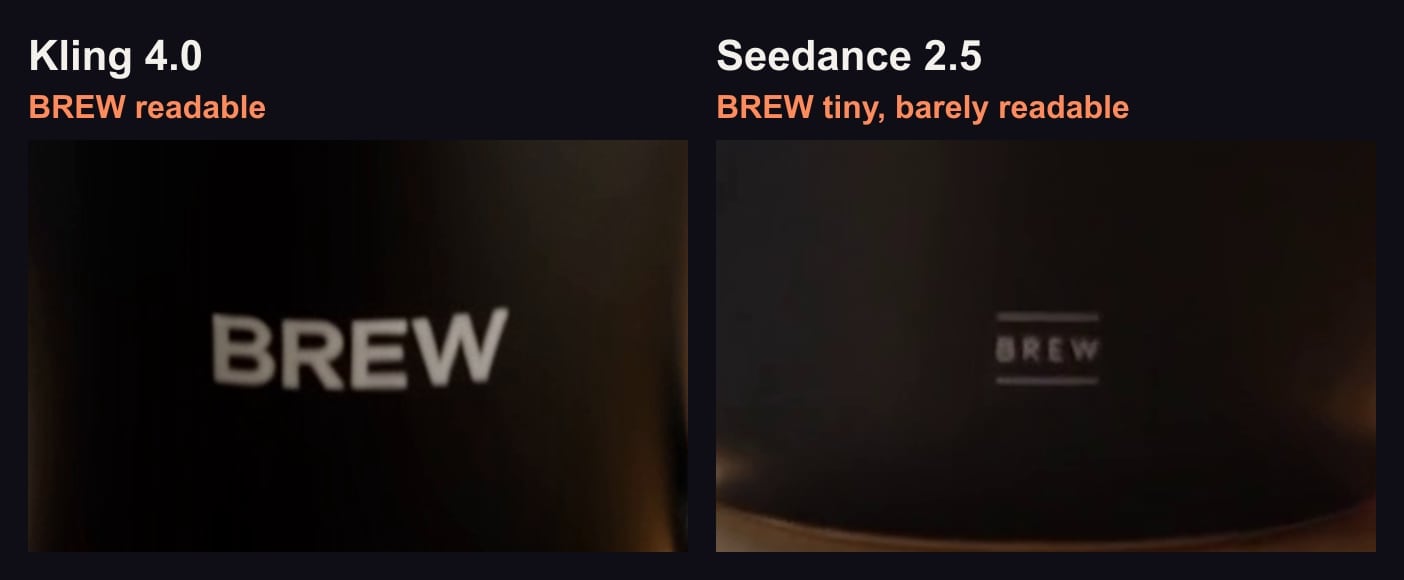
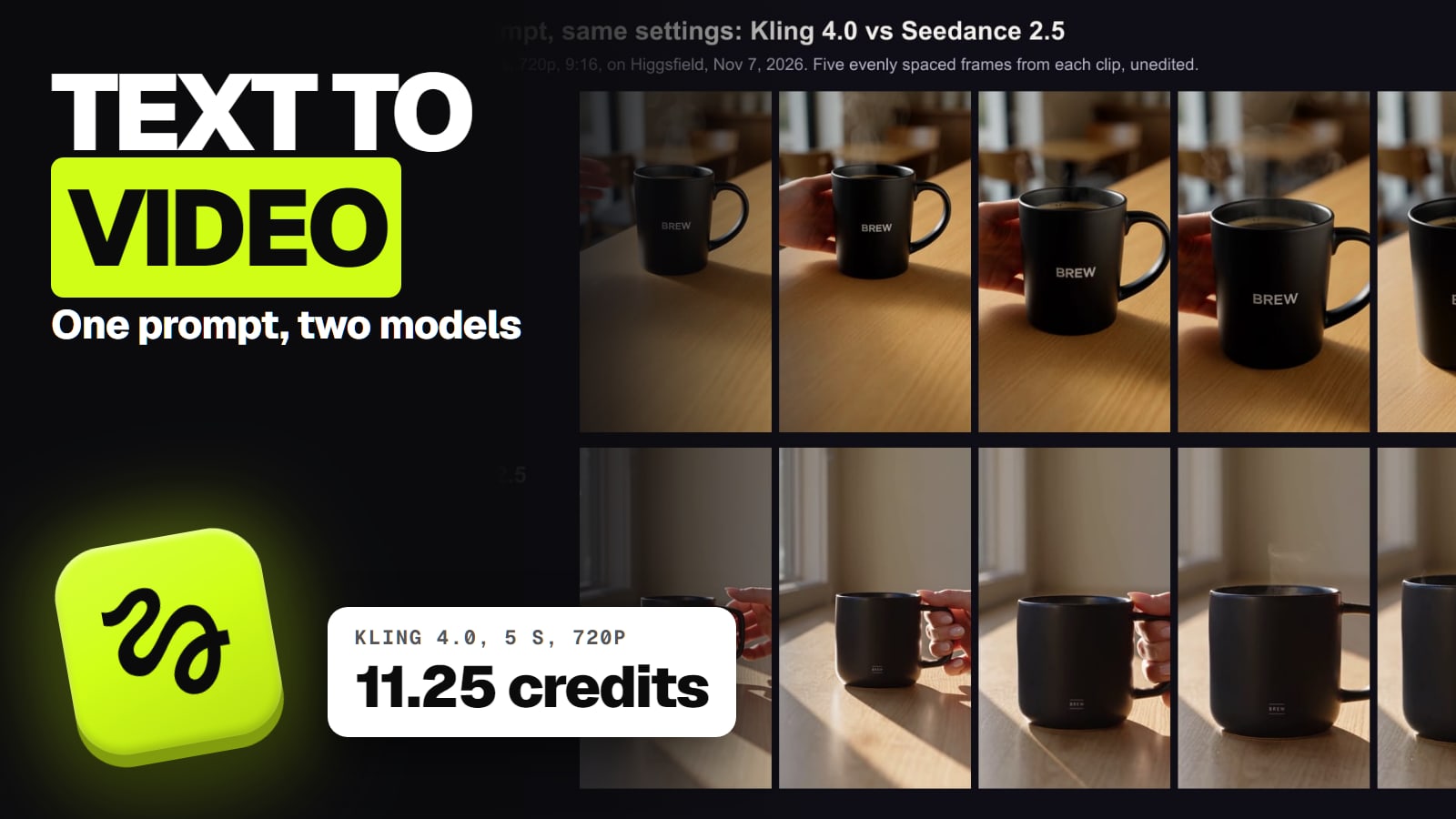
A readable logo. In our November 7 one-prompt test (5 seconds, 720p, 9:16), Kling 4.0 kept a small BREW logo on a mug clear in every frame; Seedance 2.5 kept it small but barely readable. Reading both files, Seedance's clip carried about 1.4 Mbps of video against Kling's 5.2 Mbps, and fine text is the first thing heavy compression blurs.
A believable person. In our October 27 test, Kling 3.0 turned a still of an AI model wearing our product into a 5-second handheld street clip in one attempt, and the product stayed right in every frame (the one-photo test).
Where realism breaks. In our November 3 product test, the failures that cost us clips weren't cartoonish glitches but small physical errors: a hat that stretched or twisted when a hand lifted it, a cuff that appeared from nowhere. 6 of 10 clips failed that way (cost per usable clip).
The 2.5-second frame of each 720p clip from our Nov 7, 2026 test, cropped around the logo and enlarged 2x at the same scale: Kling 4.0 left, Seedance 2.5 right. Cut from our clips; nothing was generated for this image. · Frames from our own Higgsfield test clips
One fix worth knowing before you blame the model: Seedance 2.5's bitrate setting. Our clip came through Higgsfield's connector, where it defaults to standard; Higgsfield's web panel showed "High" when we checked, and Higgsfield's changelog (Jun 19, 2026) says high bitrate gives higher video quality at the same credit cost. On a shot with fine detail, check that setting first.
Which model for realistic people?
Seedance, if you go by the platform that runs all of them. Higgsfield's help-center model guide sends "realistic human motion" to Seedance and "stylized, cinematic, or long-form video" to Kling. Higgsfield sells both, so it gains nothing by steering you either way. ByteDance's own pages describe Seedance 2.5 as audio and video generated together, in clips up to 30 seconds, but make no specific claim about faces or physics that we could quote.
Two cautions for realistic people. First, consistency: in our same-face test on two image models, one face kept every checked detail in only 6 of 8 new scenes on the better model, so expect drift between video shots too, and check each one. Second, labels: YouTube asks creators to disclose AI that makes realistic-looking content (YouTube's altered or synthetic content rules), and TikTok's guidelines require a label on AI-generated content showing realistic-looking scenes or people. The more realistic the clip, the more those rules apply.
What does a clip at top resolution cost?
Resolution is where AI video prices jump. Here is one 5-second clip at each model's top setting on Higgsfield:
Higgsfield credits for 5 seconds at each model's top resolution (Generate button and cost check, Oct 26 to Nov 8, 2026)
MiniMax H3, 2K10
Nov 3, discounted from 20
Kling 4.0, 1080p16.25
Half of 32.5 credits for 10 s (Nov 7), our arithmetic
Wan 3.0, 1080p18
Nov 3, 28 listed
Grok Imagine 1.5 Lite, 1080p (upscaled)20
Kling 3.0, 4K native, with sound30
Grok Imagine 1.5, 1080p native40
Seedance 2.5, 1080p80
Seedance 2.0, 4Kabout 110
Cost check, Oct 26
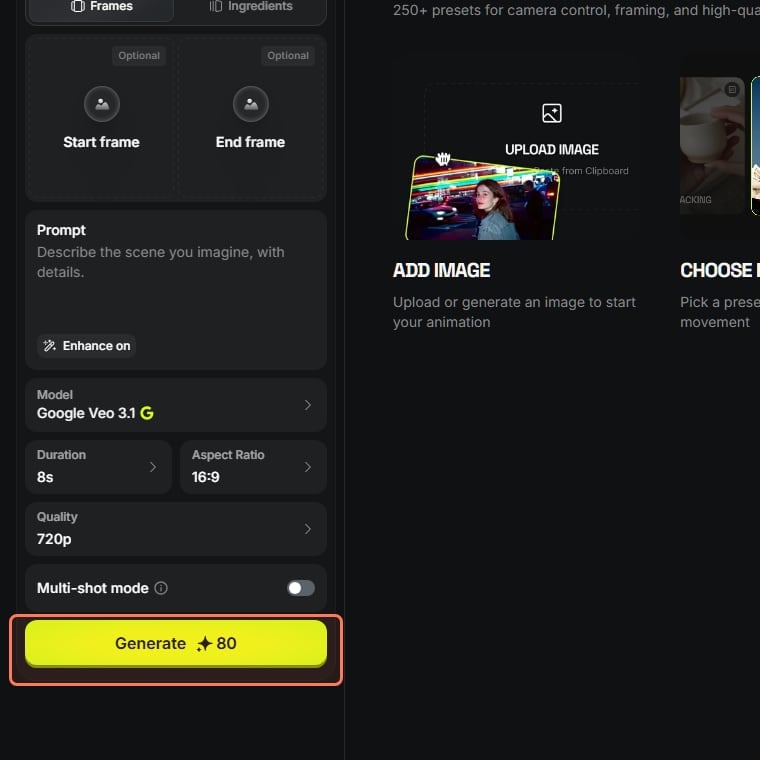
In dollars, Kling 3.0's 4K clip is about $0.99 on Ultra billed yearly and about $2.11 on Starter, our arithmetic from Higgsfield's plans on November 7 (Ultra $99 a month for 3,000 credits, Starter $19 for 270). On kling.ai the same 5 seconds of 4K is 150 Kling credits, about $2.00 on the Standard plan. Veo 3.1 at 8 seconds cost 80 Higgsfield credits at 720p on November 3; we haven't recorded its 4K price there. Seedance 2.5 at 1080p costs more than five times its 480p price (15 credits), so draft at low resolution and render only the keeper at full. Prices change often, so check the price shown to you before paying.
Google Veo 3.1 on Higgsfield, 8 seconds at 720p, 80 credits (signed out, Nov 3, 2026). Outline ours. · Screenshot of higgsfield.ai by aliteq
Where does Higgsfield fit?
Higgsfield runs Kling 3.0 in 4K, Seedance 2.0 and 2.5, Veo 3.1, Gemini Omni Flash, MiniMax H3, Wan and Grok Imagine on one balance, so you can render the same shot on two of them and judge the realism yourself before committing. It doesn't host Sora (discontinued by OpenAI in 2026), Runway, Pika or Luma, and Seedance 2.5's 4K exists only as an enterprise offer on BytePlus, which isn't available in the US. For Seedance and Kling on their own apps, see the Seedance hub and the Kling hub; Kling AI alternatives prices the rest per clip.
The best AI video generator for other jobs
Each page below answers one job from the same checked facts. All of them, grouped by job, are in our best AI video generator guide.
Best image to video AI: Seedance 2.5 to put your photo's subject in a new scene; Kling 3.0 when the photo is already the first frame.
Best AI video generator for ads: A paid Higgsfield plan: its terms allow ads and client handover; Kling 3.0 tests a 5-second hook in any shape for 10 credits.
Best text to video AI: Kling 4.0: up to 30 seconds per prompt, multi-shot and stereo sound; Google Flow and Dreamina for free tries.
Best open source AI video generator: Wan 2.2 (Apache 2.0): the 5B fits 8 GB, the 14B runs on a 24 GB card; MiniMax H3's licence excludes the US.
What we couldn't verify
Native or upscaled for most models. Kling, xAI and Google say; ByteDance, MiniMax, Alibaba, Luma and Pika don't, on the pages we read.
Frame rates. Only Alibaba (Wan 2.2's 5B model, 24 fps) publishes one among these; our 24 fps figure covers just our two clips.
Realism of models we haven't run. Veo, MiniMax, Grok, Gemini Omni and Wan have never been run by us. Any quality comparison involving them would be a guess, so we don't make one.
Runway Gen-4.5's resolution and length. Runway's help center returned an error to us.
Veo 3.1's 4K price on Higgsfield, and when its discounts end (MiniMax H3, Wan 3.0 and Kling 4.0 were below list on the dates shown).
Verdict
Pick the kind of real you need
For realistic people, start with Seedance 2.5, the model Higgsfield's own guide recommends for realistic human motion. For maximum real detail, Kling 3.0 is the only model whose maker calls its 4K native, at 30 Higgsfield credits for 5 seconds with sound. For realistic sound and dialogue, Veo 3.1. And before paying for a 1080p or 4K label, check whether it's rendered or upscaled: Grok Imagine 1.5 Lite, Gemini Omni Flash and Google Flow's options upscale.
Best for: Creators, marketers and filmmakers who need AI video that passes for real footage
Frequently asked
What is the most realistic AI video generator?
It depends on what has to look real. Higgsfield's model guide recommends Seedance for realistic human motion; Kling says Kling 3.0 renders native 4K for the most detail; Google says Veo 3.1 generates sound effects, ambient noise and dialogue natively. We haven't run Veo, so we don't rank it against the two we have.
Which AI video generator makes real 4K?
Kling 3.0, per Kling, which calls its 4K native; it cost 30 Higgsfield credits for 5 seconds with sound on Nov 3, 2026. Veo 3.1 Generate outputs 4K on Google's Vertex AI, and Seedance 2.0 offers 4K on Higgsfield, but neither page says whether that's rendered or upscaled. Gemini Omni Flash's 4K is upsampled, and Kling 4.0's 4K is still coming soon.
Is upscaled AI video worse than native?
Usually it has less fine detail, because upscaling enlarges what was rendered rather than adding texture. xAI, for example, says Grok Imagine 1.5 renders 1080p natively, while 1.5 Lite upscales 720p to 1080p.
What frame rate do AI video generators use?
Most makers don't publish it. Alibaba's README gives 24 fps for Wan 2.2's 5B model, and our Kling 4.0 and Seedance 2.5 clips from Higgsfield both came back at 24 frames a second.
Do I have to label realistic AI videos?
On the big platforms, yes. YouTube asks creators to disclose AI that makes realistic-looking content, and TikTok's guidelines require a label on AI-generated content showing realistic scenes or people; unlabeled content may be removed or labeled by TikTok.
Why does my AI video look blurry even at 1080p?
Often the top resolution is upscaled, or the file is heavily compressed. In our test, a Seedance 2.5 clip carried about 1.4 Mbps against Kling 4.0's 5.2 Mbps, and its small logo blurred; Higgsfield's high-bitrate setting for Seedance costs no extra credits, per its changelog.
Render one shot at your target resolution on two models, look at skin, fabric and small text at full size, and pay for the one that holds up.